Mexico City
Cry MachoMexico City is both the destination of Mike Milo’s mission and its chief obstacle: an immense, unfamiliar city where a boy can disappear among crowds, neighborhoods, and conflicting accounts, and where the search ultimately meets the authority of the police. Its avenues, anonymous hotel, and nighttime venues shape the practical terms of Mike’s attempt to find Rafo and bring him north.
Arrival and reconnaissance
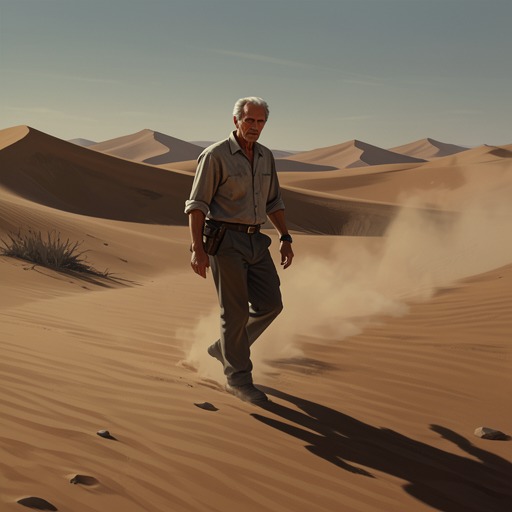
Three days after leaving Laredo, Mike recognizes that he has reached Mexico City when he passes the Green Indian statues Howard Polk had mentioned. He drives along Avenida Insurgentes, past housing projects and a spired skyscraper, crosses a viaduct over the railroad station, and arrives at the monument to the Aztec chief Cuauhtémoc, located at a major city crossroads. The route gives the city a visible scale and sequence, but reaching it does not mean that Mike understands it.
He is within a few blocks of his destination, yet takes precautions to keep his arrival from attracting notice. He leaves Mike’s northbound truck in a public garage so that the hotel will not know he has come in his own vehicle or be able to describe it. Carrying only a small suitcase, he takes a cab to Hotel Fifth Avenue. Howard’s advice is that the New York chain is full of American visitors, and that its size, expense, unpopularity, and inattentive staff will help Mike remain inconspicuous. Mike checks in under his real name and shows his tourist card; concealment, in this case, depends on blending in rather than assuming a false identity.
The hotel provides a place to pause, not a reason to rush. Arriving shortly before six in the evening, Mike considers visiting the house in Las Lomas de Chapultepec at once, while there are still a couple of hours of daylight. Because the kidnapping must happen at night, however, he needs time to study the surrounding area and compare his paper plan with the real neighborhood. He decides not to force the reconnaissance into the remaining daylight. His caution also reflects the demands of a long stay in an unfamiliar city: he has already caught himself telling a waiter in Linares that he was traveling to Tampico, and resolves to speak less freely and to avoid risky food and water.
A city searched by map and rumor
Mike’s difficulty is not simply that Mexico City is large. After four days there, he still knows neither its geography nor its language well enough to order a meal in a local restaurant. He communicates largely by pointing and pantomime, methods that do little to help locate a runaway boy. The city’s scale combines with Mike’s limited Spanish to make information difficult to gather and to verify.
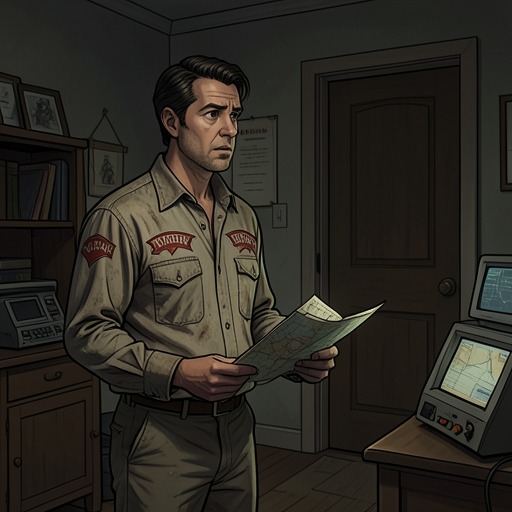
After meeting Lexa Polk, he begins searching systematically. During the day he carries a map through the Federal District, passing over churches, palaces, museums, and ancient monuments in favor of places where a boy living on the margins might be found. His search takes him to alleys behind Plaza Garibaldi, Calle Bolivar, and Avenida El Salvador; to back streets near the bullfighting arena; and into dead-ended vecindades and footpaths in the slums. This is not a tourist’s survey of the capital. Mike uses the map to direct a working search through its less celebrated, harder-to-navigate districts.
At night he follows the sparse leads Lexa has provided, but each venue exposes the gap between a clue and a reliable identification. On his third evening he goes to the Republic Square Jai Alai Court. In the immense stadium, amid thousands of spectators, shouted betting calls, and the movement of players and crowds, he recognizes how implausible it is to pick out a boy from among so many people. The only photograph he has to guide him is five years old. The boys he sees share the dark hair and eyes that might fit it, making resemblance too broad to be useful.
The following night, after moving from bar to bar and drinking Coca-Cola, Mike finds El Picador Bar, where Rafo has reportedly run errands. It is concealed in a narrow back passage beneath a workshop that processes animal hair. The name suggests a bar frequented by lower-ranking bullfighters, although Mike sees no one who appears fit to take up that profession. The venue supplies a specific lead and a place to investigate, but the report that Rafo has been seen there does not, by itself, establish where the boy is now. Mike remains stymied and concludes that he may need more information from Rafo’s mother.
From the search to the police
Mike eventually hears the name Rafo at a gathering around an illegal cockfight. The boy rises from a crouch when the owner of a bronze animal calls to him. He looks older than eleven and dirtier than the other boys, with the grime seeming, to Mike, like a badge of toughness. His confidence is especially apparent in the way he handles a spotless white gamecock. As the gathering places bets and the birds are brought to opposite sides of the ring, Mike moves closer for a view; a police whistle, a runner, a siren, and the sudden appearance of lights interrupt the contest. The city’s crowded nighttime world has brought Mike to the boy, but it has also exposed their presence to enforcement.
The later police response makes the city’s institutional reach part of the story as well as its streets and meeting places. During a long wait at an old inn, a sergeant makes calls to the national police, Rafo’s mother, and his father. The police are looking for Rafo in Mexico City to arrest him for truancy, petty theft, and resisting arrest. His mother says she will not defend him because she does not know how to do so, and suggests that he may need to learn that the law is the law. When Rafo hears the report, he assumes his father has sent for him; the sergeant tells him that his father says he knows nothing about it.
The sergeant then tells Mike and Rafo that both are under arrest, Rafo for the listed offenses and Mike for kidnapping, and that they will be taken to Mexico City. The search has therefore moved beyond private pursuit: the same urban jurisdiction that offered Mike a maze of streets and uncertain leads now frames the official consequences of his mission. The city’s narrative significance lies in this reversal. It first makes finding Rafo seem nearly impossible; once he is found, its police and the boy’s family become the forces determining what the discovery means.